The Recruiting Reality Most Families Never See
Parents often believe recruiting begins when a college coach discovers an athlete.
In reality, recruiting begins long before that.
It begins with questions.
Lots of questions.
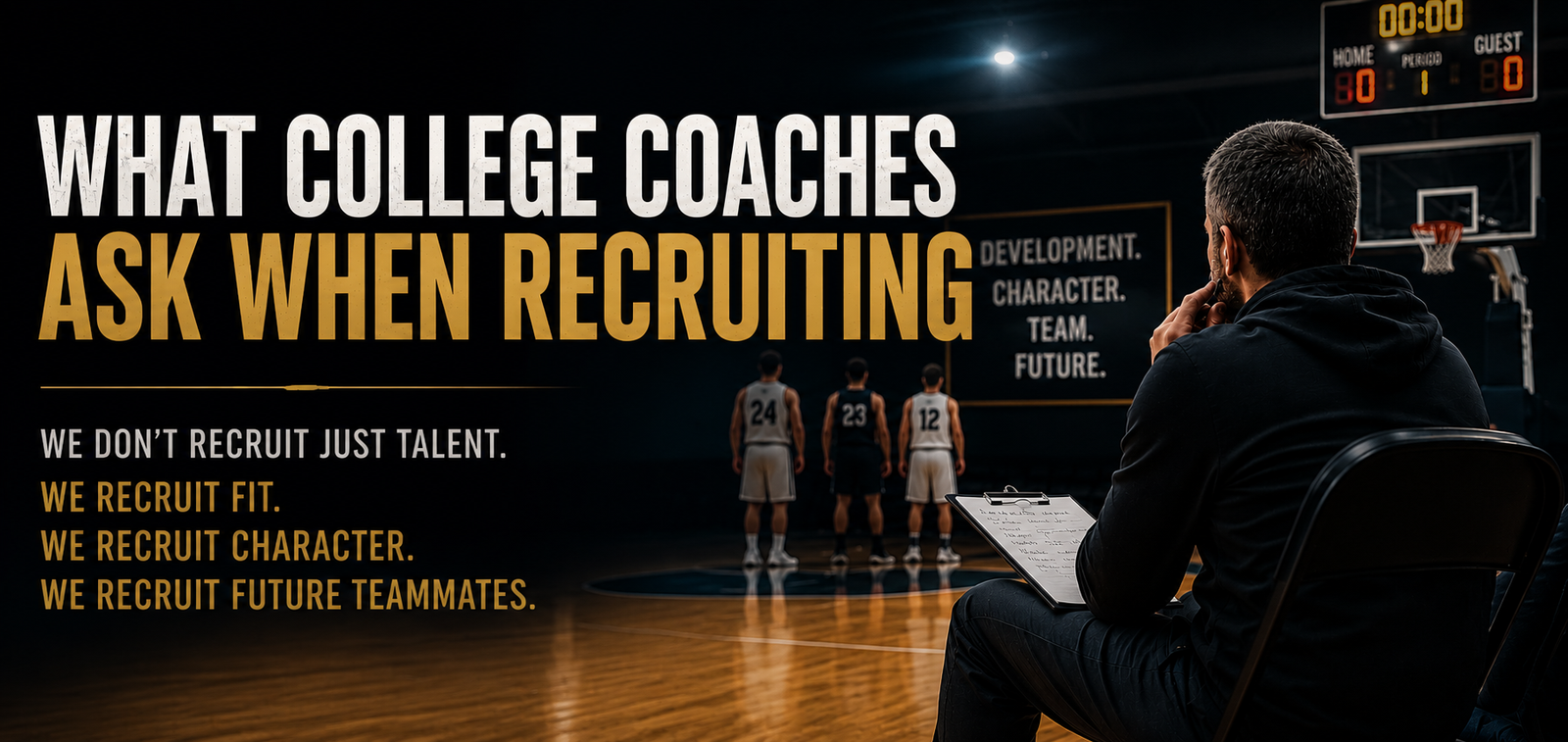
As a former college coach, I can tell you that coaches are not sitting in their offices searching for the athlete with the best social media highlights, the most followers, or the most impressive recruiting graphics.
They’re searching for answers.
Every recruiting decision carries risk.
A scholarship is an investment.
A roster spot is valuable.
And every athlete a coach brings into a program affects the culture, chemistry, and future of that team.
That’s why recruiting isn’t about finding talent.
It’s about reducing uncertainty.
The question isn’t:
“Can this athlete play?”
The question is:
“Can this athlete help us succeed?”
The Questions Coaches Are Actually Asking
When evaluating a prospect, coaches tend to work through a series of questions.
Some are obvious.
Others surprise families.
Can This Athlete Help Us Win?
This is the first question.
Not because winning is everything.
But because coaches are hired to build competitive programs.
Can the athlete contribute?
Can they solve a problem?
Can they fill a need?
Talent matters.
Production matters.
Performance matters.
But that’s only the beginning.
Is This Athlete Getting Better?
One of the most attractive qualities in recruiting is growth.
Coaches love athletes who improve.
Because improvement suggests something important:
The athlete hasn’t reached their ceiling.
An athlete who is significantly better today than they were a year ago is often more attractive than an athlete who has remained the same despite having more talent.
Development creates confidence.
Development creates projection.
Development creates opportunity.

How Does This Athlete Fit Our Program?
This is where many recruiting conversations fall apart.
Families often focus on whether a school wants their athlete.
Coaches focus on whether the athlete fits their environment.
Different programs need different players.
Different systems require different skill sets.
Different coaches value different traits.
A great athlete can still be a poor fit.
And a lesser-known athlete can become a perfect fit.
Recruiting is rarely about finding the best player.
It’s about finding the right player.
Can They Meet Academic Standards?
This question becomes more important every year.
Athletic ability may get attention.
Academics keep doors open.
Coaches want athletes who can remain eligible, manage responsibilities, and represent the institution well.
The strongest recruiting opportunities often belong to athletes who provide coaches flexibility both academically and athletically.
Parents often underestimate how many opportunities are lost because of academics.
College coaches don’t.
What Are Trusted People Saying?
Recruiting is built on relationships.
A coach may trust:
A high school coach.
A club coach.
A trainer.
A teacher.
Another college coach.
An admissions representative.
The recruiting world is smaller than most families realize.
People talk.
References matter.
Character matters.
Reputation matters.
One trusted recommendation can open doors.
One warning can close them.
That’s why recruiting remains a relationship business.
The Biggest Recruiting Myth
One of the most common misconceptions in youth sports is that exposure creates offers.
Exposure creates awareness.
Awareness creates evaluation.
Evaluation creates opportunity.
But exposure alone does not create recruiting value.
If exposure were enough, every athlete playing on a national schedule would receive scholarship offers.
That’s simply not how recruiting works.
Exposure is the invitation.
Development is what keeps coaches interested.
Why Some Prep Schools Help
This is where prep schools can provide real value.
The best programs don’t simply increase visibility.
They improve athletes.
They strengthen academics.
They provide structure.
They create meaningful relationships.
They help athletes answer the questions coaches are already asking.
That is very different from simply placing athletes in front of college coaches.
The best prep schools create better prospects.
The weakest prep schools simply create better marketing.
And families need to understand the difference.
The Question Families Should Be Asking
Instead of asking:
“How many coaches attend your games?”
Try asking:
“How does your program help athletes become more recruitable?”
Those are two very different conversations.
One focuses on visibility.
The other focuses on value.
College coaches care about value.
And ultimately, that’s what recruiting is all about.
Coming Next: Before You Pay
Before spending $30,000–$100,000 on a prep school, families need a framework for evaluating programs.
In Part 3, we’ll break down the questions every parent should ask before committing to a prep school, post-grad program, or elite athletic academy.